
1. Our Teaching Method: Tailored and Effective
We believe learning Polish should be practical, motivating, and built around you. That’s why our lessons are designed according to your goals, your pace, and the way you learn best. Speak Polish with confidence. Speak Polish Fluently
One-to-one focus
Whether you’re a complete beginner, learning Polish for family reasons, work opportunities, relocation, or preparing for an official exam, your tutor adapts grammar, vocabulary, and pronunciation to your real-life needs.
Cultural immersion from day one
Polish is deeply connected to history, traditions, and modern European culture. We bring authentic materials into class — news clips, short videos, music, podcasts, and cultural insights — so you experience Polish as it is truly spoken today, not just from a textbook.
Active communication & feedback
Polish may look complex, but you’ll start speaking from the very first lesson. Through roleplays and everyday situations (shopping, travel, work, social life), you’ll build fluency step by step. Your tutor gives constant feedback to help you sound more natural and confident.
Structured yet flexible curriculum
We develop all four essential skills — speaking, listening, reading, and writing — along with grammar and vocabulary. At the same time, lessons stay flexible and can include topics that interest you: business, travel, culture, or everyday life. Speak Polish fluently.
2. Challenges & Tips for English Speakers Learning Polish
Polish is known as one of the more challenging European languages for English speakers — but with the right method, it becomes logical and very rewarding. Speak Polish Fluently
Cases and grammar endings
Polish uses seven grammatical cases, which change word endings depending on their role in the sentence. This may sound intimidating, but we teach cases in clear, practical patterns, always connected to real communication instead of abstract rules.
Word order flexibility
Unlike English, Polish word order is more flexible because grammar endings show the function of each word. We help you understand how meaning and emphasis change depending on sentence structure.
Pronunciation & consonant clusters
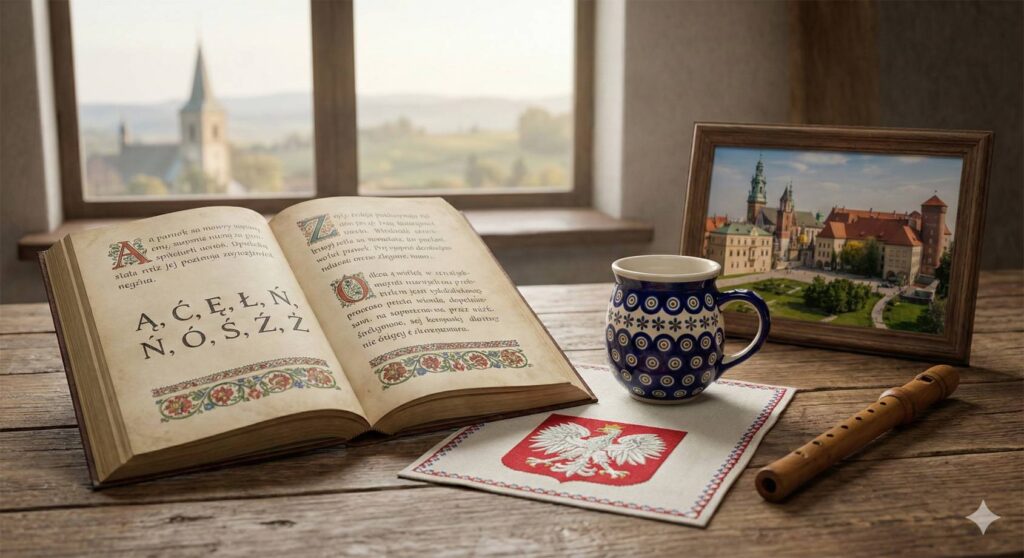
Polish has sounds that don’t exist in English, like ś, ć, ź, ż, ł, and famous consonant clusters (e.g., Szczęście, Wstrząs). Step-by-step pronunciation training helps you master these sounds naturally and clearly.
False friends & vocabulary surprises
Some Polish words look familiar but mean something completely different. For example, aktualnie means “currently,” not “actually.” We highlight these traps early so you avoid common misunderstandings.
The good news
Polish is very phonetic — once you learn the rules, you can usually pronounce a word correctly just by reading it. That’s a huge advantage for building confidence quickly.
With the right guidance, what first seems difficult becomes a satisfying and motivating challenge.
